The CEIPI IP Business Talk with Maeve O’Flynn and Jamie Barcombe from Finnegan Europe LLP examined how cleantech companies can keep their IP position connected to a technology moving into industrial use. The conversation with Prof. Dr. Alexander J. Wurzer on 29 October 2026 covered disclosure, pilot projects, evolving portfolios, trade secrets, freedom to operate👉 Strategic analysis to determine whether a product or service might infringe existing IP rights. and enforcement.
The GreenTech IP Expert Contributors brought these themes into the working reality of industrial projects. Their discussion addressed certification pressure, the limits of NDAs, ownership of improvements, project-team participation, invention disclosure systems and the practical consequences of claim amendments. Together, the interview and the written exchange showed how apparently technical or commercial decisions can change a company’s IP position.
Key message:
A cleantech IP strategy👉 Approach to manage, protect, and leverage IP assets. needs to follow the technology, the business and the relationships through which commercialisation happens. Its practical value depends on people recognising when a decision affects disclosure, ownership, competitive advantage or freedom to operate, and involving the relevant expertise while options remain available.
Replay the IP Business Talk of Thursday, 29 October 2026
Guests
- Maeve O’Flynn, Partner, UK and European Patent👉 A legal right granting exclusive control over an invention for a limited time. Attorney at Finnegan
- Jamie Barcombe, Associate, UPC Representative and Patent Attorney at Finnegan
Green Tech👉 Eco-friendly innovations to reduce environmental impact and promote sustainability. IP Expert Contributors
Certification creates a disclosure decision before the patent timetable is ready
Leila Mae Vafana connected the interview with her experience building the IP function at a water-membrane technology company. A partner needed technical details for environmental certification before the patent application had been filed. Her account described pressure from several stakeholders to provide the requested information. This example makes the timing problem particularly tangible for GreenTech. Evidence of environmental performance can be part of the route to adoption. Producing that evidence may require an exchange of technical information at a point when the protection position is still developing. The company has to understand both the commercial need for disclosure and the consequences of what it reveals.
In her written response, O’Flynn recognised certification and regulation as potentially crucial to commercialisation. She suggested that commercial leadership should ultimately make the decision, with stakeholders identifying opportunities and risks early in the timetable. She also raised the possibility of providing information sufficient for the regulatory purpose without compromising patentability.
The practical implication is to examine the actual information request. What does the recipient need to establish? Which technical details are necessary? Which colleagues should assess the proposed disclosure before it takes place? Vafana’s example connects IP advice with the design of the commercialisation process itself.
The transition from an NDA to a collaboration agreement needs a recognisable trigger
Karin Nordström Dyvelkov identified a boundary that R&D and business teams may find difficult to recognise. Initial discussions covered by an NDA can develop into joint work requiring a collaboration agreement and an allocation of IP rights. She asked how non-IP and non-legal colleagues could be helped to identify that transition. Her question adds a distinct issue to the confidentiality discussion. An agreement controlling information exchange does not, by itself, resolve all the questions arising when parties begin developing something together. The parties may need to address the ownership and use of results, access to pre-existing technology and the conditions for exploiting improvements.
During the interview, O’Flynn stressed the need to check what an NDA actually covers, including its duration and subject matter. Andrew Cockerell reinforced that point in the written discussion: colleagues need to know the content of the IP clauses. Dr. Karin Bätz added that education around NDAs and the company’s contract management systems can be a source of difficulty in maintaining confidentiality.
Taken together, these contributions point towards an operational recognition problem. Teams need to notice when the subject of a discussion changes, when a partner begins contributing to development and when the planned activity exceeds the existing agreement. A useful process gives them an accessible route to review at that moment. Dyvelkov’s question remains a design task for each organisation, rather than one answered by a universal contractual checklist.
Pilot work can create the IP that makes industrial deployment possible
Virpi Tognetty drew attention to the new knowledge generated during scale-up. Pilot and demonstration work can reveal process windows, formulations, operating parameters, integration solutions and application know-how that were absent when the original patent was filed. She asked how ownership and access should be handled when customers and external partners contribute to those situations.
The interview addressed the same development dynamic. O’Flynn encouraged companies to return to their original filings and compare them with the technology now being developed. The original disclosure may support some developments, while other improvements may require separate consideration and potentially another application. Barcombe emphasised having agreements that address resulting IP even where a pilot is initially expected merely to implement existing technology.
Edward O’Gorman supplied an industrial perspective from Mannok. He described regular validation of technologies at technology readiness level seven and above, with foreground IP ownership addressed as clearly as possible in the contract. His comment connected that contractual work with obtaining an advantage from inventions👉 A novel method, process or product that is original and useful. contributing to CO₂ abatement.
These contributions show why the pilot should be treated as a continuing source of commercially relevant knowledge. The original laboratory invention may establish feasibility, while later operating knowledge makes reliable implementation possible. Portfolio reviews and collaboration agreements need to remain connected to both layers.
Early IP involvement can support the pace of customer pilots
Jussi Salo asked how IP risks around customer pilots could be managed without slowing the business. In his written reply, Barcombe highlighted early involvement so that IP and contract discussions can proceed alongside business discussions. He also suggested that addressing IP in heads of terms can help frame subsequent negotiations and identify issues early. The value of that approach lies in making dependencies visible before technical and commercial commitments become difficult to change. A team preparing a pilot can identify the information to be exchanged, the contributions expected from each party and the questions requiring agreement. These discussions can then develop with the project timetable.
Edward O’Gorman’s further observation about high-emitting industries adds context. He described a strong focus on real-world CO₂ reduction and carbon capture, utilisation and storage benefits, with implementation taking priority under approaching deadlines. This was an industrial observation about pressure to deliver. It reinforces the need for IP processes that can operate within the implementation timetable.
The combined message is that timely advice depends partly on timely access. An adviser brought into the project early can help shape the conditions under which work proceeds. An adviser first consulted after disclosure or after a contract is settled has fewer opportunities to influence those conditions.
Coordination needs a responsible person and access to the project team
Jussi Salo also raised the question of custodianship: who should coordinate IP across R&D, product management, business development and IP? O’Flynn’s interview response favoured someone within the business driving the process, potentially from product development, supported by an agreed IP strategy with a clear commercial purpose.
Virpi Tognetty extended the question by observing that the invention at the beginning may differ substantially from the business eventually commercialised. She asked how the IP expert could become an integral part of the team beyond the laboratory and initial scale-up phases. In a follow-up exchange with Andrew Cockerell, she explicitly suggested including the expert as a project-team member. Cockerell described having seen IP counsel attend all project meetings for this reason.
Mara Sada, contributing to the wider audience discussion, emphasised the effort needed to sustain dialogue between non-IP colleagues and the IP team. She considered the IP team well placed to promote coordination because of its knowledge of competitors, the market and the company’s activities.
These perspectives offer different organisational starting points. A business colleague can drive alignment with the product and commercial objectives, while the IP team contributes specialist interpretation and competitor knowledge. The practical management requirement is to establish who keeps the dialogue active and how relevant information reaches the people able to act on it.
Development checkpoints make IP decisions visible
Andrew Cockerell described companies in which IP is included in the design stage-gate process. Before a design moves to the next stage, the checklist includes IP considerations. In the examples he mentioned, in-house legal colleagues reviewed these checkpoints to help ensure the subject was addressed.
Edward O’Gorman added a complementary mechanism: a shared invention disclosure portal for tracking ideas and concepts throughout a project. Such a channel can preserve information between formal reviews and help a changing development team retain visibility of what has emerged.
The interview also considered the limits of relying on a few formal gates. Wurzer raised agile and design-driven development, where relevant changes may happen continuously. O’Flynn emphasised training and integration with technical and commercial teams, with a process adapted to the organisation’s way of working. For GreenTech companies, the useful question is how the process notices consequential change. A new operating parameter, material, supplier or partner contribution may warrant review before the next scheduled milestone. Checkpoints, disclosure channels and project participation can complement one another when their responsibilities are clear.
Patent and trade secret decisions should reflect the implementation
Jussi Salo asked how a company should decide whether to patent an improvement or retain it as a trade secret👉 Protects confidential business info for competitive advantage. – particularly when it does not want to disclose its processes to competitors. In his written response, Barcombe identified processes as a common candidate for secrecy where reverse engineering is less likely and detecting infringement👉 Unauthorized use or exploitation of IP rights. can be difficult.
He also stressed the measures needed after that choice: systems to maintain secrecy, education of those who know the information and compartmentalisation. This develops the interview’s discussion of the resources and risks involved in maintaining confidentiality. A decision to keep information secret creates a continuing organisational obligation.
Karin Nordström Dyvelkov added that combining the two approaches can be powerful: some aspects can remain confidential while others are patented. That perspective fits an industrial technology containing several layers of knowledge. A publicly protected technical contribution and confidential implementation knowledge may perform different commercial functions.
The company needs to understand which information can be learned from the product, what must be shared with partners and which internal practices are required to retain control. The decision should also consider the consequences if secrecy is lost or a competitor independently develops the same solution.
FTO assumptions need to follow changes in the product and process
O’Flynn described freedom-to-operate analysis as a continuing task. An assessment can depend on a particular process temperature, component or technical configuration. Engineering decisions made later may change those assumptions and require the analysis to be revisited.
The contributor discussion helps explain how such changes can become visible. Virpi Tognetty’s call for project-team involvement gives the IP expert access to the evolving implementation. Andrew Cockerell’s checkpoints create occasions for review. Edward O’Gorman’s disclosure portal offers a way of recording developments that might otherwise remain within individual teams.
These are possible organisational supports for the continuing FTO process discussed in the interview. Their usefulness depends on whether they capture the changes relevant to third-party rights and bring them to the appropriate specialist. Merely recording more information does not establish freedom to operate. For an industrial cleantech project, the management task is to connect review with the changes that could affect market access. That makes FTO part of development decisions while technical alternatives and commercial responses can still be assessed.
Detectability affects filing drafting and prosecution
Andrew Cockerell made a particularly direct connection between enforcement and prosecution. Detectability can influence whether the company files an application, how the claims are drafted and how they are amended during examination. He warned that an amendment acceptable to an examiner may leave a claim whose infringement is difficult to detect or enforce.
This extends Barcombe’s interview recommendation to draft with the intended commercial use of the patent in mind. A company seeking to restrain competitors needs to consider how it would establish that the relevant activities fall within the claims. For processes, different steps performed by different parties or in different countries can complicate that exercise. The implication is to review an amendment’s commercial consequences alongside its prospects of allowance. Does the claim still address the activity the business wants to control? Could the company obtain evidence of that activity? Which alternatives would remain open to a competitor?
Alexander Wurzer framed the underlying economic question as what the company wants to prevent others from doing and why that restriction would matter. Andrew Cockerell’s contribution shows how that question remains relevant through prosecution, including when a technically permissible amendment changes the practical usefulness of the right.
The contributor discussion connects IP expertise with industrial decisions
The exchange made the transition to market concrete. Vafana’s certification example showed how disclosure pressure arises in a real deployment pathway. Dyvelkov and Bätz brought contract boundaries, training and management systems into focus. Tognetty and Salo asked how IP expertise becomes part of projects and how responsibility is sustained across functions.
Cockerell linked project governance with the practical use of patent claims. O’Gorman connected invention recording, validation and contractual ownership with industrial implementation and CO₂ abatement. The guests’ responses showed how these questions can be approached through early dialogue, commercially grounded portfolio decisions and processes adapted to the company.
For the GreenTech Industry Focus, the wider significance is the changing demand for IP expertise. Companies need advisers who can interpret technical developments, understand commercial dependencies and participate in decisions as they arise. Maintaining that interaction helps a business preserve its ability to develop, collaborate and retain value as sustainable technology reaches the market.
Guests: Camille Terfve and Jamie Barcombe

Maeve O’Flynn is a Partner and UK and European Patent Attorney at Finnegan Europe LLP. With a chemistry background and more than a decade of in-house experience, including roles at Johnson Matthey and Shell, she advises on commercially focused IP strategies, global patent portfolios, trade secrets and collaboration agreements. Her technical experience includes sustainable chemistry and catalysis, and her practice also covers European Patent Office opposition proceedings.

Jamie Barcombe is an Associate, Solicitor, Patent Attorney and Unified Patent Court representative in Finnegan’s London office. With a background in biochemistry and pharmaceutical R&D, he works across clean technology, sustainable fuels and life sciences. His practice connects patent strategy and prosecution with freedom-to-operate analysis, commercial transactions and patent litigation👉 Formal court action to enforce or defend patent rights in major disputes. in the UK and at the UPC.
Green Tech IP Expert Contributors

Leila Mae Vafana is Strategic IP Manager👉 An IP Manager oversees strategy, protection, and use of IP. at Breeze IP, working at the intersection of intellectual property👉 Creations of the mind protected by legal rights., software and business strategy. Her work spans strategy, partnerships and initiatives that connect portfolio analysis👉 Comparing defined objects to guide strategic decisions and resource allocation. with commercial decisions. She brings in-house experience from water-membrane technology and develops practical IP education for engineering teams and founders, helping colleagues recognise protection and freedom-to-operate questions early in development.

Maaike Van Velzen is IP Manager at VITO, where she works on shaping the IP portfolio to support the transition from research to practical application. Her background spans innovation👉 Practical application of new ideas to create value., IP and business leadership, including experience at Deloitte Legal. Her professional interests include collaboration, the management of intangible assets and the role of IP in bringing sustainability research into use.
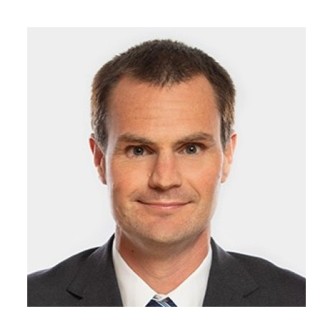
Andrew Cockerell is a Partner, UK and European Patent Attorney and UPC representative at D Young & Co. With a background in aeronautical engineering, he advises across physics, engineering and IT on patent protection, portfolio strategy and patent intelligence. His interests include renewable energy and green technologies, with work addressing sustainable aviation fuels, hydrogen and the transition to net zero.
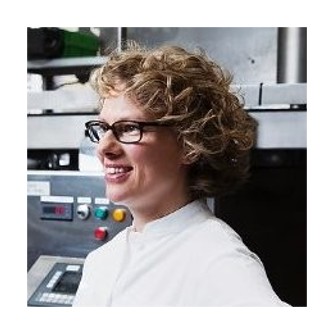
Karin Nordström Dyvelkov is Vice President Intellectual Property and Head of IP at GEA Group. Her work includes the development of a global IP function with aligned processes, common standards and a shared direction. She brings an industrial leadership perspective on connecting intellectual property with innovation, business value and growth, including the coordination of IP questions across R&D, commercial teams and collaboration partners.
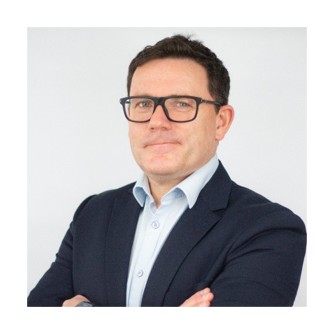
Edward O’Gorman, PhD, is Intellectual Property Lead at Mannok. His work supports the company’s development of IP and innovation management, including invention capture, portfolio development and internal IP awareness. He brings an industrial perspective on the commercial use of intellectual property, connecting contractual ownership and technology validation with implementation, new revenue opportunities and the company’s sustainability objectives.
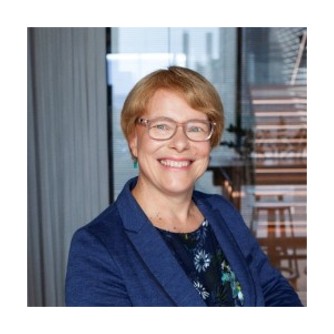
Virpi Tognetty is Director of IP and Innovation Solutions at Kemira and a European Patent Attorney. She leads work on patent and trademark👉 A distinctive sign identifying goods or services from a specific source. portfolios within a business focused on sustainable chemistry and resource-efficient solutions. Her perspective connects IP management👉 Strategic and operative handling of IP to maximize value. with research, innovation and business decisions. She also chairs the Finnish Chamber of Commerce’s IPR Committee for the 2025–2027 term.

Dr. Karin Bätz is IP Counsel at Sulzer and a European and German Patent Attorney. She holds an LL.M. in Intellectual Property Law and Management through the MIPLM programme. Her professional focus spans IP strategy and IP management in an industrial setting, bringing legal expertise together with the organisational processes through which companies manage their intellectual property.

Jussi Salo is a Patent Officer at ABB Oy Motors and Generators, with responsibilities that include supporting colleagues on IP matters and coordinating IP processes. His industrial experience connects technical development with invention identification and patent work. He brings a practical perspective on how R&D, product management, business development and IP colleagues can coordinate protection decisions as technologies move towards commercial use.
