
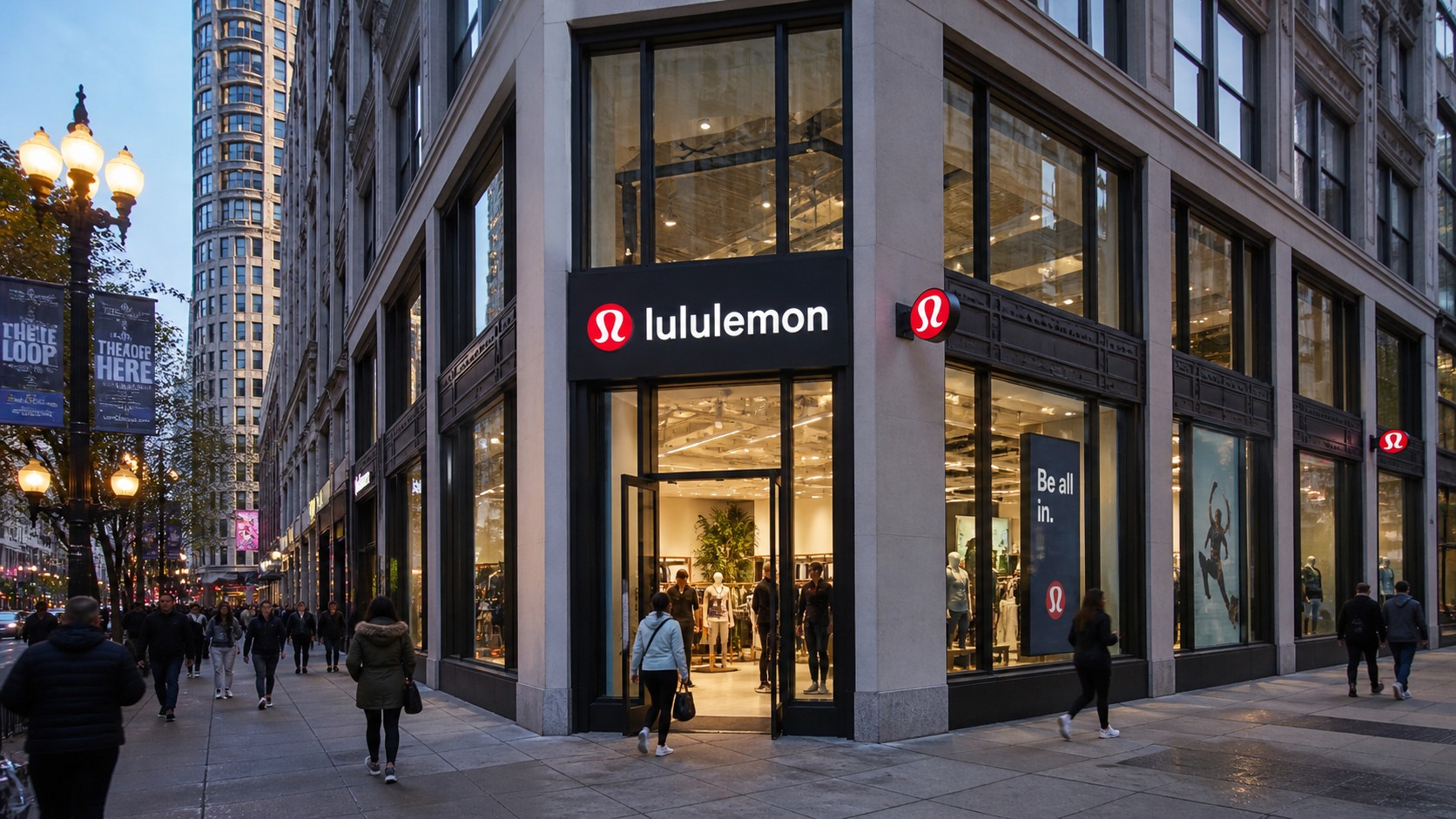
Lululemon v. Costco: Why Fashion Needs Layered IP Protection
This case examines the 2025 dispute between Lululemon and Costco to illustrate how fashion companies protect their products in fast-moving markets. It explains the fashion cycle and how copycats selectively imitate only the most successful designs at peak demand, using speed, small modifications, and lower costs. The article highlights why enforcing IP rights in fashion is structurally difficult due to short product lifecycles, functional design elements, and slow legal processes. It shows how a multi-layered IP strategy—combining trademarks, design rights, copyright👉 A legal protection for original works, granting creators exclusive rights., patents, and unfair competition—helps brands create overlapping protection, increase imitation costs, and defend their premium positioning.
Background material on the IPBA Connect platform
Here you can find digital IP lexicon 🧭diplex pages by IP subject matter experts:
Synergistic IP Portfolio Development with Design Rights by Malgorzata Zyla
Enforcement of IP Rights in China by Paolo Beconcini
IP as a Leadership Tool by Ilanit Appelfeld
From Europe to the US: Protecting, Structuring & Growing with IP by Matthias Schuhmacher
Here are the relevant 🔎IP Management👉 Strategic and operative handling of IP to maximize value. Glossary entries:
When the fashion cycle becomes an imitation window
Fashion is not only a creative industry. It is also a timing industry. The commercial value of a garment often depends less on its absolute novelty👉 Requirement that an invention must be new and not previously disclosed. than on its position inside a fashion cycle. A fashion cycle describes the movement of a style from first introduction, through rising visibility, toward peak demand, then decline and eventual obsolescence. In a traditional model, a design appears first in a premium or designer context, is adopted by early consumers, becomes visible through media and social influence, reaches mass demand, and finally loses its novelty as the market moves on.
For IP management, this cycle is crucial because the value of a design is not evenly distributed across time. The most valuable phase is usually not the first moment of creation, but the moment when demand becomes visible and scalable. At that point, the design has already passed an informal market test. Consumers have shown interest, influencers may have amplified it, retailers have seen traction, and competitors can observe which products deserve imitation. This creates a structural asymmetry. The original producer carries the uncertainty and cost of design, positioning, quality, inventory, communication, and brand👉 A distinctive identity that differentiates a product, service, or entity. building. The copycat can wait, observe, and imitate only the products that have already shown commercial promise.
This is why dupes are so difficult to stop in fashion. Copycat producers do not need to copy an entire collection. They can concentrate on the visible winners within a season. They may enter at the rise or peak of the fashion cycle, when demand is strongest and the original product has already become recognizable. They can simplify the product, use cheaper materials, reduce quality, omit expensive details, and imitate only the most visible elements that create the market association. In activewear, these elements may include the silhouette, waistband, seam architecture, pocket placement, zipper configuration, surface texture, color impression, product name association, or the overall look of a hoodie, jacket, or pant.
The 2025 dispute between Lululemon and Costco illustrates this tension. Lululemon accused Costco of selling lower-priced products that allegedly resembled premium Lululemon items such as Scuba hoodies, Define jackets, and ABC pants. The products identified in public reports included items sold under labels such as Kirkland, Danskin, Jockey, Spyder, and Hi-Tec. The important IP management lesson is not simply whether one particular garment is too close to another. The deeper question is how a premium fashion company can protect a product whose commercial value emerges quickly, whose visible features can be copied rapidly, and whose enforcement window may be shorter than the legal process itself.
Why copycats do not copy everything
Copycat strategy in fashion is selective. It is rarely about reproducing the whole innovation process👉 A structured journey of creating and implementing new ideas.. It is about extracting the market signal from the original producer’s success and translating it into a lower-priced product fast enough to benefit from the same trend. This makes the copycat’s business model👉 A business model outlines how a company creates, delivers, and captures value. fundamentally parasitic on market validation. It waits for the original brand to identify a desirable look, create demand, and invest in consumer recognition. Then it enters with a version that is close enough to activate the same desire, but different enough to create legal uncertainty.
Several tactics are common. First, copycats focus on high-visibility products. A simple basic garment that sells steadily but does not create a recognizable fashion signal may not be the best target. A product with a strong silhouette, a distinctive name, a recognizable shape, or a widely discussed social media presence is much more attractive. Second, they copy the visible commercial code rather than the full product. The goal is not necessarily to match technical quality or material performance. The goal is to make the consumer think of the premium product at the moment of purchase or when the product is seen by others.
Third, copycats make deliberate small changes. A seam is moved, a collar is adjusted, a logo is omitted, a pocket is resized, a color is slightly altered, or the product is sold under a different label. These changes may be commercially minor but legally significant. They can complicate infringement👉 Unauthorized use or exploitation of IP rights. analysis because many fashion rights protect specific elements, not an abstract market impression. Fourth, copycats benefit from speed. Modern sourcing, manufacturing networks, online platforms, and social media trend detection allow lookalike products to reach the market in weeks or months. In many cases, this can happen within the same fashion cycle, before the original producer has fully monetized the demand it created.
This timing matters because fashion products often have a short product life cycle. Legal protection that arrives too late may be economically weak, even if it is formally valid. Litigation👉 The formal process of resolving disputes through proceedings in court worldwide. can take months or years. A preliminary injunction may be difficult to obtain. Evidence of copying may be contested. Functional features may narrow the scope of protection. And the lawsuit itself may generate attention for the dupe. The paradox is that enforcement can sometimes amplify the very product the brand wants to suppress.
In this setting, IP strategy👉 Approach to manage, protect, and leverage IP assets. must not be understood as a single right attached to a single garment. It must be understood as a defensive architecture around a product-market position. The relevant question is not: Which IP right protects this item? The better question is: Which combination of rights makes imitation more costly, slower, riskier, and less commercially attractive?
Building a multi-layered protection strategy
A multi-layered protection strategy in fashion combines different IP rights because each right protects a different layer of value. Fashion products are hybrid objects. They carry aesthetic value, brand value, technical value, functional value, social signaling value, and sometimes artistic value. No single IP right captures all of these dimensions. A layered strategy accepts this fragmentation and uses it strategically.
Trademarks protect signs of commercial origin. In fashion, this includes names, logos, slogans, recurring patterns, color marks in exceptional cases, and sometimes three-dimensional shapes if they function as source identifiers. Trademarks are powerful because they can last indefinitely if renewed and used properly. They also connect legal protection to brand equity👉 The added value a brand creates through recognition, trust, and loyalty.. In the Lululemon context, product names such as Scuba or Define, house marks, logos, and distinctive brand identifiers can help protect the consumer association that makes the premium product valuable.
Design rights protect the appearance of a product or parts of a product. Registered designs can be used to protect silhouettes, garment configurations, seam patterns, surface ornamentation, and other visual features, provided they meet the applicable requirements. In the EU, unregistered Community designs can be particularly useful for short fashion cycles because protection arises automatically upon disclosure and lasts three years. This is well suited for seasonal collections and fast-moving fashion, although enforcement requires proof of copying and the scope may be narrower than for registered rights.
Design patents in the United States can play a similar role for ornamental features. They are important where the protected visual configuration can be clearly defined. However, relying on the total product shape alone can be risky. If a copycat changes one visible feature, the overall impression may shift enough to create an argument against infringement. That is why element-level filings can be important. A brand may protect not only the entire garment but also specific repeatable features: a waistband structure, pocket configuration, seam layout, zipper arrangement, collar shape, or distinctive panel geometry.
Copyright may protect original graphic works, prints, surface patterns, artistic motifs, or highly original design elements, depending on jurisdiction. In the EU, the Cofemel line of case law confirms that industrial designs may receive copyright protection if they are original. In fashion, copyright is often more useful for prints, graphics, artwork, and surface decoration than for basic garment shapes. Still, it can be a valuable layer when design rights are unavailable or when copying focuses on expressive features.
Patents protect technical innovation👉 Practical application of new ideas to create value.. In fashion and activewear, this may include fabric technologies, thermoregulation systems, compression structures, closures, manufacturing methods, wearable technology, moisture management, or specific garment constructions with technical effect. Patents are not the normal tool for protecting the look of a hoodie or jacket. But they can be strategically important where performance features create differentiation. In activewear, the boundary between aesthetics and function is especially sensitive because many visible features also serve a practical purpose.
Trade secrets protect confidential know-how with economic value, such as supplier information, manufacturing processes, material formulas, quality-control methods, product development data, trend analytics, or sourcing strategies. Trade secrets do not stop visible copying once a product is on the market. But they can protect the hidden system that allows a brand to produce quality, speed, fit, consistency, or innovation before competitors catch up.
Finally, unfair competition👉 Rivalry between entities striving for a shared goal or limited resource. and trade dress can serve as residual protection where the overall market presentation creates confusion or unfair appropriation👉 Capturing value from intellectual assets through legal and strategic means.. In the United States, trade dress under the Lanham Act can protect the total image and overall appearance of a product if it identifies source, is non-functional, and creates likely confusion. In the EU, there is no exact equivalent to US trade dress, but similar strategic functions may be performed by unregistered designs, three-dimensional trademarks, passing-off-type doctrines in some jurisdictions, and unfair competition law.
Enforcement challenges in fashion and activewear
Enforcing protected clothing designs against competitors is difficult because fashion sits at the intersection of imitation, inspiration, functionality, trend, and brand identity. Not every resemblance is infringement. Fashion constantly reuses shapes, styles, colors, and cultural references. This makes it hard to draw a clean line between lawful trend participation and unlawful copying.
The first challenge is speed. A fashion cycle may be shorter than the enforcement cycle. If a product is introduced, becomes popular, is copied, and loses relevance within a season, then a court decision after the season may have little practical value. Damages may still matter, but the immediate market opportunity may be lost. This creates a time lag that copycats can exploit.
The second challenge is marginal exclusivity. Clothing designs often consist of many small elements, some of which are common in the industry. If a brand registers only the whole product, competitors may make minor changes and argue that the overall impression is different. If the protected feature is too broad, it may be attacked as not novel, not distinctive, functional, or too close to existing design language. If the protected feature is too narrow, it may be easy to design around.
The third challenge is functional-aesthetic overlap. This is especially important in activewear. Seams can create visual identity, but they may also improve fit, compression, comfort, or mobility. A waistband may look distinctive, but it may also serve support and performance functions. A jacket silhouette may signal a brand, but it may also reflect practical choices around movement, warmth, or layering. The more a feature is functional, the more difficult it becomes to protect it through rights that exclude functional subject matter.
The fourth challenge is proof. For unregistered design rights, unfair competition, and trade dress-type claims, the brand may need to show copying, reputation, distinctiveness, likelihood of confusion, or unfair advantage. Copycats can argue independent creation, trend conformity, generic design language, different branding, lower price points, or consumer awareness that the product is only a dupe. In a dupe culture shaped by social media, consumers may know very well that they are not buying the original. That does not automatically eliminate all legal claims, but it complicates confusion-based arguments.
The fifth challenge is enforcement economics. Litigation is expensive. It may be rational against a large retailer, but not against every smaller copycat. Marketplaces, influencers, discount retailers, and private-label supply chains can fragment responsibility. A brand needs an enforcement strategy that distinguishes between high-impact targets, platform takedowns, negotiated removals, customs measures, and full litigation.
From legal rights to IP management architecture
Multi-layered protection alleviates these challenges because it creates redundancy. If one layer fails, another may still work. If a design right is attacked as too narrow, a trademark👉 A distinctive sign identifying goods or services from a specific source. may protect the product name or brand signal. If a trade dress claim struggles with functionality, a design registration may still protect ornamental elements. If a registered right arrives too late for one seasonal product, unregistered design protection may provide immediate coverage. If a copycat avoids the logo, it may still face design, trade dress, copyright, or unfair competition risks.
The strategic goal is not to eliminate all imitation. In fashion, that is unrealistic. The goal is deterrence, cost increase, and selective enforcement. A good protection architecture forces copycats to make more changes, wait longer, accept more legal risk👉 The probability of adverse outcomes due to uncertainty in future events., reduce resemblance, or abandon the most valuable features. Each of these effects can protect the premium brand’s position, even without a final court judgment.
For a company like Lululemon, the economic logic is clear. Premium pricing depends on more than fabric and stitching. It depends on product recognition, trust, community, perceived quality, and brand-coded design. If a 120-dollar hoodie can be undercut by a 30-dollar dupe in the same season, the threat is not only lost sales. The deeper threat is erosion of the relationship between product design, brand meaning, and willingness to pay.
This is why IP management in fashion must begin before copying occurs. It requires mapping the protectable elements of each product line, deciding which elements are seasonal and which are long-term brand assets, filing selectively, documenting disclosure dates, monitoring social media and retail channels, preparing evidence of copying, protecting product names and visual identifiers, and integrating IP decisions into design, marketing, sourcing, and launch planning.
The Lululemon v. Costco dispute therefore illustrates a broader lesson. Fashion IP is not weak because fashion lacks creativity. It is difficult because fashion value is fast, visible, cumulative, and socially amplified. A single IP right is usually too slow, too narrow, or too fragile to carry the full burden. Multi-layered protection turns IP from a formal legal afterthought into an operational system for defending market position during the short window in which fashion value is created.
Legal disclaimer: This case study is for general educational and IP management discussion purposes only. It does not constitute legal advice, does not assess the merits of any pending dispute, and should not be relied upon as a substitute for advice from qualified legal counsel in the relevant jurisdiction.