The CEIPI IP Business Talk with Camille Terfve, Partner at Mewburn Ellis, examined how digital MedTech companies can connect software and AI inventions👉 A novel method, process or product that is original and useful. with commercially useful IP positions. The conversation with Prof. Dr. Alexander J. Wurzer on 14 October 2026 addressed invention identification, portfolio development, international drafting and the dependencies involved in bringing a medical product into use.
The MedTech IP Expert Contributors extended that discussion into the decisions companies face in practice. Their comments explored what inventors regard as obvious, how applications can remain relevant as AI evolves, which evidence should support patentability arguments, and how clinical workflows, contracts, data rights and open-source software👉 Freely accessible code that can be used, modified, and shared. shape commercial deployment.
Key message:
Digital MedTech IP strategy👉 Approach to manage, protect, and leverage IP assets. needs to connect the technical contribution with the clinical workflow, the product roadmap and the business model👉 A business model outlines how a company creates, delivers, and captures value.. The contributor discussion showed why useful advice requires continuing interaction between inventors, IP specialists and the people responsible for developing and deploying the product.
Replay the IP Business Talk of Wednesday, 14 October 2026
Guest
- Camille Terfve, Partner and UK and European Patent👉 A legal right granting exclusive control over an invention for a limited time. Attorney at Mewburn Ellis
MedTech IP Expert Contributors
Inventors can overlook the contribution they worked hardest to achieve
One of the talk’s central questions concerned the first judgement made about a development. Researchers and engineers may assume that a software method is unsuitable for patent protection or describe their own achievement as obvious. If the company relies on that assessment, an important contribution may never reach an IP specialist.
Max Scheu captured the tension with two short observations from the inventor’s perspective: “This aspect was obvious” and “This took us two years full time work.” The juxtaposition illustrated how familiarity with a solution can obscure the difficulty of reaching it.
The time spent on a development does not establish inventive step. It does, however, provide a reason to ask what the team struggled with, which approaches failed and which technical choices finally produced a useful result.
Terfve’s approach was to explore those questions in conversation with the inventor👉 A person who creates new devices, methods, or processes.. The development team provides the technical detail; the adviser helps assess where the potentially patentable contribution lies. The wider audience discussion also raised inventor education. Building internal understanding can improve the quality of the dialogue and help teams recognise when specialist input is needed.
Using an established AI model can still involve an inventive contribution
Sofie McPherson pointed out that using an off-the-shelf AI model can still involve protectable developments. Relevant contributions may concern training data, how the model is trained or a new use of the model. Identifying the invention within that combination is often the difficult part.
Christopher Hartland developed this point through the implementation. He suggested asking whether the team had needed to modify the established tool, change the data structure or introduce preprocessing or post-processing steps to obtain the intended result.
His follow-up clarified an important distinction: questions about data rights and freedom to operate👉 Strategic analysis to determine whether a product or service might infringe existing IP rights. remain necessary, while using a known tool does not automatically settle the patentability of the resulting development.
For a company, the implication is to examine the complete technical process. What enters the system? How is it prepared? What does the model do? Which further processing makes the output useful? A potentially relevant contribution can be located in the relationship between these steps.
Protection needs to remain relevant as the product changes
Karen Rodriguez proposed combining broader protection for the underlying technical architecture or processing approach with prompt follow-up filings for important improvements, new clinical applications and model developments.
Her comment connected an initial application with a continuing invention-capture process. The company needs to distinguish the contribution likely to endure from later developments that may justify their own assessment.
Damir Brackovic introduced an “onion model” for describing an evolving AI invention. The outer layers would explain the underlying principle, while inner layers would describe the application, model and training information. This offered a way of thinking about the relationship between a durable technical concept and its specific implementations.
These approaches raise a drafting challenge: the application needs enough detail to explain the invention credibly while supporting the scope sought. A broad description still needs a sound technical basis. Future flexibility depends on what the original application actually discloses.
Portfolio value needs a continuing commercial review
William Wathey connected future-oriented drafting with a focused filing strategy. For products that evolve dynamically, he suggested shorter applications centred on one or two key concepts, alongside a commercially driven portfolio review.
Christopher Hartland added another question: if a product has moved on and a patent has become less useful to the company’s own business, could the protected contribution still be relevant in another industry? His comment opened a broader assessment of remaining commercial value.
Together, these observations make portfolio review a resource-allocation decision. Continued prosecution and maintenance need a current rationale. That rationale can concern the company’s product, a future application or another credible commercial opportunity. The underlying management question is what the right can still help the company achieve. A portfolio becomes more useful when those purposes are explicit and revisited as the business develops.
AI creates new questions about prior art and inventive step
Damla Simsek asked whether widespread use of AI in MedTech R&D could change expectations about the capabilities of the skilled person and thereby affect inventive-step assessments, including for inventions developed without AI.
Her follow-up focused on traceability. If an examiner relies on an LLM’s output, what evidence supports that output and the assertion that something belongs to common general knowledge? Her concern was that an unexamined model response could introduce hindsight into the assessment.
Christopher Hartland anticipated that arguments based on LLM responses might also appear in opposition and litigation👉 The formal process of resolving disputes through proceedings in court worldwide.. He presented this as a possible development in practice, rather than an established rule.
Simsek separately raised the growing volume of AI-generated technical disclosures and their possible relevance as prior art. This is a question requiring analysis of the individual disclosure, its availability and its technical content. The discussion highlighted the need for evidence that can be examined and challenged as AI enters both research and patent practice.
Disclosure and claim scope need to be considered together
Damla Simsek also asked how applicants should reconcile detailed disclosure with the scope they want to obtain. Architecture, training data and hyperparameters may help explain an AI implementation, while a highly specific example can raise questions about how an examiner interprets the broader claim.
Terfve placed this in the familiar relationship between embodiments and claims. Detailed examples can be narrower than the invention being claimed. She also suggested that an examiner’s familiarity with the field can influence how readily they understand the relationship between a specific example and a broader technical teaching.
The exchange adds a practical consideration to future-oriented drafting. The application should make clear which features explain the general contribution, which belong to particular implementations and how the disclosed examples support the claimed invention. For development teams, this requires a clear account of why the method works. That explanation helps the adviser assess what must be disclosed and what can reasonably be expressed more generally.
Clinical workflows connect patent strategy with regulatory reality
Jean-Nicolas Longchamp emphasised the importance of regulatory context in MedTech IP. A digital medical invention operates within a clinical and commercial environment that influences how it will actually be deployed.
Frédéric Le Mauff drew attention to the end-user workflow. The patent narrative can change according to how a process is carried out. Understanding that workflow helps identify the relevant technical steps and their practical relationships.
Damir Brackovic observed that many steps along a clinical workflow may warrant patentability assessment, individually or in combination. Some will present greater challenges than others.
These comments reinforced Terfve’s recommendation to describe the real context when preparing an application. Computational analysis, input collection, reporting and subsequent medical use may need to be understood together, even where different jurisdictions require different claim approaches. The clinical workflow gives the drafting discussion a concrete foundation.
Enforceability belongs in the initial drafting discussion
Damir Brackovic extended the idea of drafting for success to the eventual use of the right. Which type of claim is appropriate? Who would be the potential infringer? How difficult would enforcement be?
Terfve agreed that drafting needs to consider the practical use of the product and the activities the company may later wish to capture, alongside subject-matter eligibility in the intended jurisdictions.
For digital MedTech, this adds an implementation perspective to claim design. A clinically useful process may involve several participants and technological components. The adviser needs to understand how the system will operate and where the relevant activity occurs.
The strategic value of obtaining a patent therefore depends partly on whether its claims address a commercially meaningful and practically usable position. Those questions are easier to explore while the application is being prepared.
Sofie McPherson also asked which litigation trends in computational biology companies should consider when preparing an IP strategy. Her question extended the discussion towards the future use and contestability of the portfolio, adding another reason to connect drafting decisions with the intended commercial setting.
Data governance and contracts support commercial freedom to act
Frédéric Le Mauff brought data and open-source compliance directly into the freedom-to-operate discussion. Terfve agreed that sound data and software governance provides a useful starting point.
Le Mauff also called for IP involvement in contract negotiations, reflecting the importance of partnerships in MedTech. Terfve’s response connected contractual terms with practical feasibility, the company’s intended activities and its ability to exploit and protect its own inventions.
These exchanges show why commercial deployability requires several connected assessments. The company needs to understand which software, data and third-party technologies enter its product, what rights permit their use and which obligations accompany access.
Le Mauff further asked how IP strategy should reflect versioning and changing business models. His comment linked the creation and loss of portfolio value over time with changes in how a digital product generates revenue. This wider perspective connects IP review with the commercial evolution of the offering.
His earlier contribution to the IPBA Plattform, How to make customers pay for your digital product with IP, develops the relationship between IP, digital ecosystems and customer value.
The contributor discussion made the decisions more concrete
The exchange added practical detail to the talk’s central management message. Max Scheu highlighted the gap between an inventor’s familiarity with a solution and the effort required to develop it. Sofie McPherson and Christopher Hartland examined where an invention can emerge when established AI tools are used. Karen Rodriguez, William Wathey and Damir Brackovic explored ways of keeping protection relevant as implementations evolve.
Damla Simsek brought evidence, disclosure and the changing role of AI in patent assessment into the discussion. Jean-Nicolas Longchamp emphasised regulatory context. Frédéric Le Mauff connected the clinical workflow with data governance, contracts and the changing economics of digital products.
For MedTech companies, these perspectives point towards a continuing development dialogue. Inventors explain the technical achievement. Commercial teams explain the intended value and route to market. IP advisers help connect those inputs with available rights, dependencies and decisions about future investment.
This is the role of the Industry Focus: bringing professional and industrial perspectives together so that the changing demand for IP expertise becomes visible through concrete questions.
Explore the wider context in our Industry Focus on MedTech and Digital Health Systems.
Guest: Camille Terfve
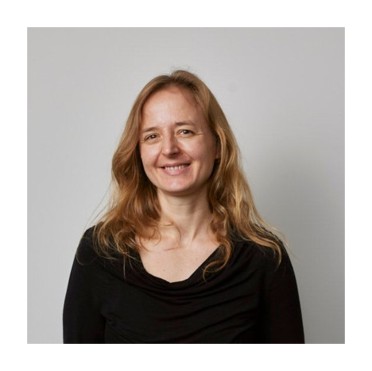
Camille Terfve is a Partner and UK and European Patent Attorney at Mewburn Ellis. She specialises in computational biology, bioinformatics and AI in the life sciences, including digital health, computational diagnostics and medical image analysis. Her practice connects patent drafting, IP strategy and freedom to operate with the development of data-driven medical technologies.
MedTech IP Expert Contributors

European Patent Attorney at NLO
Karen Rodriguez Hernandez has a background in biomedical and biomechanical engineering. Her contribution proposed combining protection for the underlying technical architecture with follow-up filings for important improvements, clinical applications and model developments.
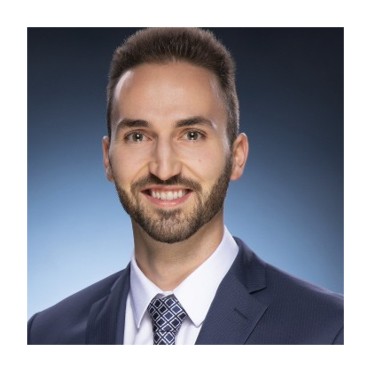
Partner and Swiss and European Patent Attorney at Hepp Wenger Ryffel
Max Scheu focuses on medical technology👉 Application of technology to diagnose, treat, and improve health outcomes. and mechanics, including heart valves, endovascular procedures and dental technology. His comments illustrated how inventors can regard a result as obvious even after investing substantial development effort.
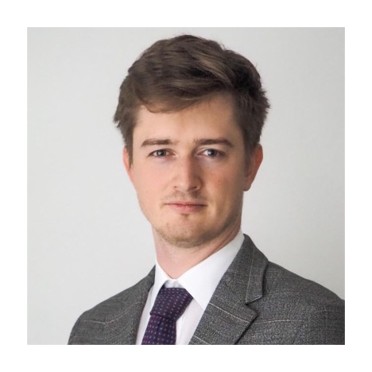
Patent Attorney and Associate at Thum and Partner
Richard Bonna works on patent applications and patent disputes, with a focus on electrical, mechanical and medical engineering. His practice also includes software-related inventions. He is part of the MedTech IP Expert Contributor community.

European Patent Attorney and UPC Representative at aera
Damla Simsek combines engineering expertise with IP law and management. Her comments examined AI-generated disclosures, evidence for common general knowledge, inventive-step assessment, disclosure and claim scope, defensive filings and the importance of timing.

Managing Associate and UK and European Patent Attorney at Mathys and Squire
William Wathey works across engineering, software and AI, with particular experience in medical devices and medical software. His contribution connected future-oriented drafting with focused applications and commercially driven portfolio review.

European and Chartered UK Patent Attorney at Høiberg
Christopher Hartland has a research background in experimental condensed matter physics and magnetic resonance. His comments connected invention identification with adaptations to established tools, portfolio value beyond the original product and the possible use of LLM outputs in patent disputes.

European Patent Attorney and UPC Representative at 3Shape
Damir Brackovic brought an industrial patent-management perspective to the discussion. His comments addressed layered descriptions of AI inventions, protection along clinical workflows, inventor education, claim types and the practical enforceability of the resulting rights.

Medical device entrepreneur and Managing Partner at AB Healthcare Consulting
Alexandre Barros works at the intersection of healthcare innovation👉 Practical application of new ideas to create value., IP strategy and commercialisation. His professional background includes medical-device development, licensing👉 Permission to use a right or asset granted by its owner. and bringing healthcare technologies to market. He is part of the MedTech IP Expert Contributor community.
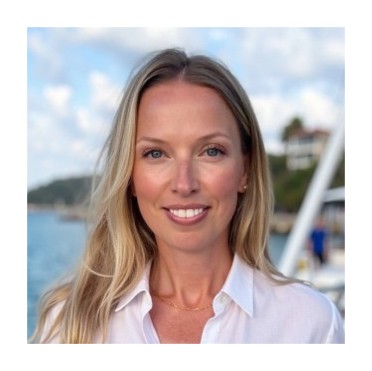
Partner and British and European Patent Attorney at HOFFMANN EITLE
Sofie McPherson specialises in technologies at the convergence of life sciences and computing, including AI, digital health and bioinformatics. Her comments highlighted inventions involving established models, training data and new applications, and raised litigation trends in computational biology.
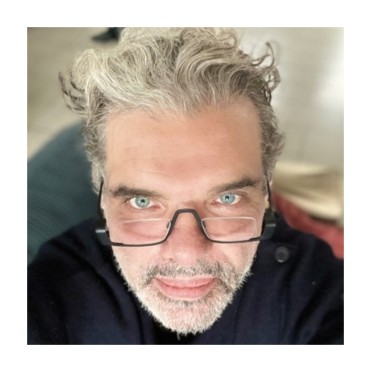
Senior Corporate IP Counsel at bioMérieux
Frédéric Le Mauff works on digital IP, including patents, software copyrights, data rights and open-source compliance. His comments connected IP strategy with end-user workflows, partnership contracts, data governance, versioning and the evolution of digital business models.
