How Patents Power Interoperability in the Payment Industry
In the fast-paced and hyper-connected world of global finance, seamless transactions are not just a convenience—they are a necessity. At the heart of this seamlessness lies a concept known as interoperability👉 Systems' ability to exchange and use data seamlessly., a crucial pillar in ensuring that systems, platforms, and technologies can communicate effectively with each other. For industry giants like Mastercard, interoperability is more than a technical achievement—it’s a strategic imperative. To protect and strengthen this pillar, Mastercard leverages an expansive patent👉 A legal right granting exclusive control over an invention for a limited time. portfolio and cutting-edge innovations that span far beyond simple payments.
This blog post explains how Mastercard uses patents to secure and enhance interoperability in the payments ecosystem, and how these protected technologies support broader services like fraud prevention, data analytics, and loyalty programs.
Understanding Interoperability in the Payment Industry
At its core, interoperability is the ability of different systems to work together—to exchange, process, and use information across various platforms without friction. In the payment sector, this translates to cards working at any merchant terminal, mobile wallets interacting with traditional banking systems, and real-time cross-border payments navigating through national clearinghouses and international gateways seamlessly.
From a technological perspective, interoperability involves:
- Data Interchangeability: Ensuring data formats are understood across platforms.
- Protocol Compatibility: Aligning different communication protocols for smooth data exchange.
- System Integration: Connecting disparate systems without major overhauls.
- Cross-Platform Support: Operating consistently across devices and applications.
- Standardization: Adopting common standards for interfaces, data formats, and procedures.
For a company like Mastercard, achieving and maintaining interoperability across this complex matrix is both a challenge and a competitive advantage.
The Role of Patents in Safeguarding Interoperability
In a fiercely competitive landscape, technological innovation👉 Practical application of new ideas to create value. needs protection. That’s where patents come in—not just as legal shields, but as strategic tools that:

- Protect Intellectual Property👉 Creations of the mind protected by legal rights.: Ensuring proprietary methods and systems can’t be replicated by competitors without licensing👉 Permission to use a right or asset granted by its owner..
- Enable Licensing and Cross-Licensing: Creating revenue streams and fostering collaboration with other innovators.
- Build Brand👉 A distinctive identity that differentiates a product, service, or entity. Reputation: Signalling innovation leadership and trustworthiness to the market.
- Block Competition👉 Rivalry between entities striving for a shared goal or limited resource.: Preventing rivals from using similar technologies.
- Drive Standardization: Patented solutions often become de facto industry standards.
Mastercard has embraced this approach with vigor, amassing over 4,000 patent families, many of which directly target interoperability challenges in payments.
Mastercard’s Interoperability-Related Patents: Innovation in Action
Let’s explore some of Mastercard’s key patents that address interoperability across various dimensions of the payment ecosystem:
- Real-Time Cross-Border Payment Interoperability
Patent: US 11,514,412 B2
This patent addresses the issue of incompatibility between domestic real-time payment systems. For example, Singapore’s FAST and the U.S.’s THC systems typically cannot communicate directly. Mastercard’s patented solution facilitates seamless real-time cross-border transactions between such networks, enabling international transfers with minimal latency and high security.
- Interoperable Digital Wallet Payment Systems
Patent: US 11,663,563 B2
Consumers using digital wallets (e.g., Google Pay) often face issues when paying at merchants with bank-specific QR codes. This patent ensures interoperability between incompatible wallet systems and merchant infrastructures, allowing payments regardless of the original payment method or platform. It solves a critical pain point in the rise of alternative payment methods.
- Universal Distributed Data Storage System
Patent: US 11,249,970 B2
This system allows data providers to store and share information in a standardized, collision-resistant format, enabling interoperability between data storage infrastructures. This is crucial for financial data sharing, ensuring different banks and institutions can securely collaborate using a universal data structure.
Beyond Payments: Leveraging Interoperability in Other Domains
What makes Mastercard’s interoperability patents especially valuable is their reusability across multiple domains. These technologies aren’t siloed within payment systems—they extend to fraud prevention, data analytics, and loyalty programs.
- Loyalty Programs
Mastercard’s patented infrastructure enables loyalty rewards to be automatically applied across devices and platforms, without merchants or issuers needing to overhaul their systems. Interoperability here ensures that a consumer can earn or redeem rewards whether they use a credit card, a mobile wallet, or a wearable device.
This seamless integration reduces friction in customer experiences and boosts participation in reward schemes—an area that drives user retention and brand loyalty.
- Data Analytics
In today’s data-driven economy, the ability to aggregate and analyze financial data across different systems is gold. Mastercard’s patents establish secure, standardized channels for such data flow. This allows institutions to:
- Consolidate transaction data across networks.
- Apply AI/ML techniques for customer insights.
- Track user behavior securely.
- Provide analytics services without breaching privacy norms.
By harmonizing data across platforms, Mastercard helps build a 360-degree view of financial behavior—an invaluable asset for banks and retailers alike.
- Fraud Prevention
Perhaps the most critical application of interoperability lies in fraud detection. Mastercard’s patented systems allow for:
- Aggregation of transaction data across networks.
- Real-time fraud pattern detection using AI and machine learning.
- Biometric enhancements and 3-D Secure Protocols.
- Cross-platform fraud intelligence sharing.
Patents like US 12112331 (Rule-Based Machine Learning for Precise Fraud Detection) and US 2023/0351400 (Early Detection of Network Fraud Events) highlight how interoperability enhances security. By observing behavioural patterns across multiple platforms, Mastercard can flag anomalies much earlier than isolated systems.
Mastercard’s Strategic Edge: Innovation Meets Integration
Mastercard’s holistic approach to interoperability is not just a defensive strategy—it’s a blueprint for innovation-led market leadership. Here’s how their patent-driven model gives them an edge:
- Agility in Service Integration: Patented interoperability technologies allow Mastercard to quickly incorporate new services like buy-now-pay-later (BNPL), tokenization, and crypto payment rails.
- Ecosystem Expansion: Secure interoperability supports partnerships with fintechs, merchants, governments, and regulators.
- Customer Trust: Seamless, secure, and fast transactions enhance user confidence and brand loyalty.
- Regulatory Compliance: Standardized and secure communication protocols help meet international compliance standards.
Challenges and the Road Ahead
While Mastercard’s strategies are robust, challenges remain:
- Rapid Technological Evolution: New players and platforms emerge regularly, demanding constant updates to interoperability protocols.
- Cybersecurity Threats: More interconnectivity also increases the attack surface for cyber threats.
- Regulatory Variance: Different countries have varied data laws, which can complicate cross-border interoperability.
However, Mastercard’s strong patent foundation and commitment to emerging technologies (such as generative AI for fraud detection, and contactless payment innovations) position it well to navigate these complexities.
Conclusion: Interoperability as the Foundation of Financial Innovation
Mastercard’s role in securing interoperability goes far beyond ensuring that cards work globally. It touches every facet of the digital financial experience—from loyalty rewards to fraud prevention. Their patent strategy showcases a proactive approach to protecting core infrastructure while enabling innovation at the edges.
As the world moves toward more digitized, decentralized, and data-rich financial ecosystems, interoperability will only grow in importance. Mastercard’s blueprint—built on patented technologies, cross-functional adaptability, and ecosystem thinking—offers a compelling vision of what a truly interoperable financial future can look like.
In a world where systems must speak the same language, Mastercard ensures they not only speak—but listen, understand, and evolve together.
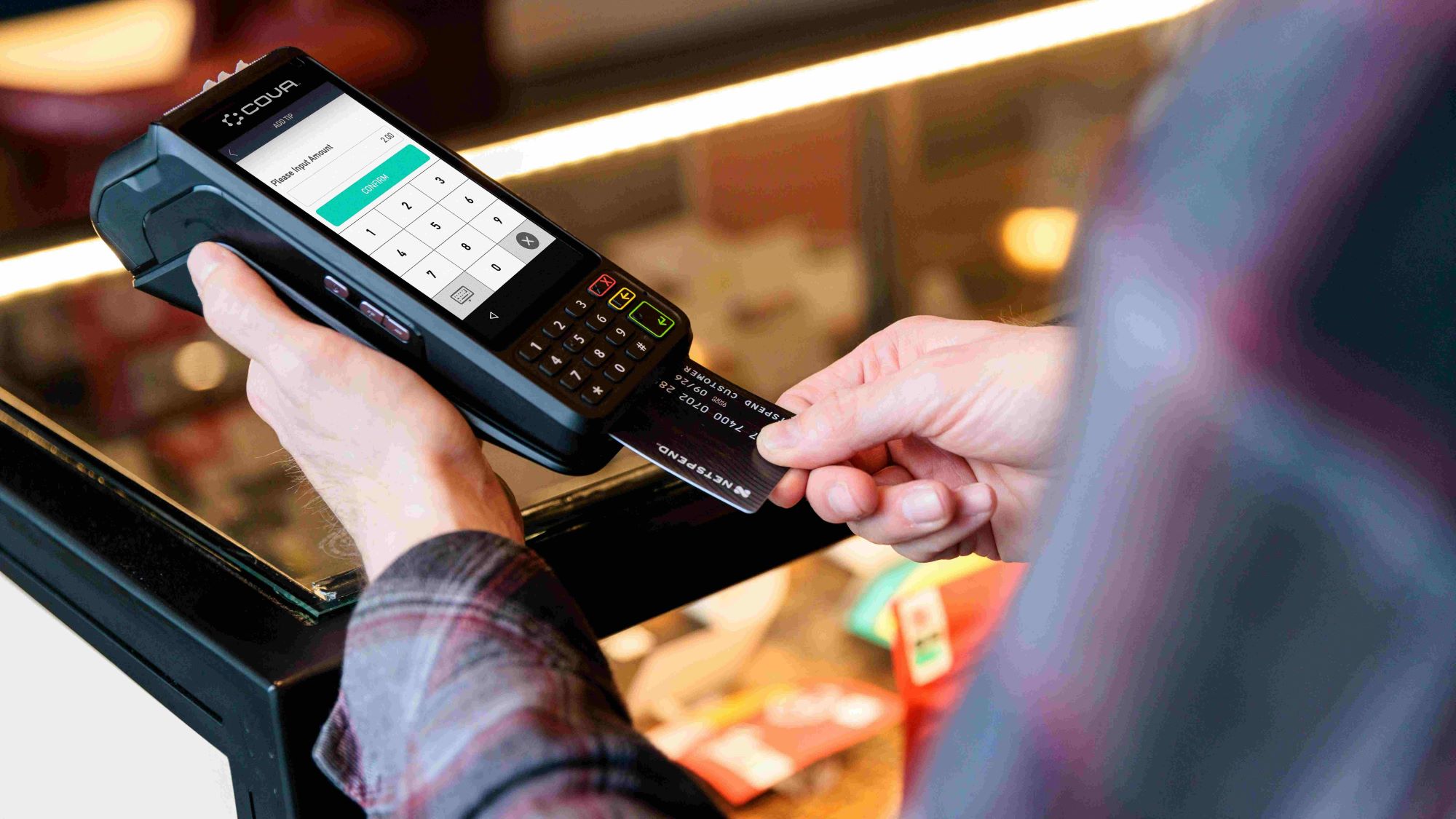
Foto by Cova Software on Unsplash