
Intellectual property👉 Creations of the mind protected by legal rights. (IP) plays a pivotal role in modern business strategy, especially in sectors driven by innovation👉 Practical application of new ideas to create value., branding, and technology. As companies grow and evolve, so too do their IP portfolios — often becoming vast, complex, and difficult to manage effectively. Patents, trademarks, copyrights, and design rights accumulate over time, but without clear oversight and alignment, these portfolios can become fragmented, underutilized, or even a liability. To avoid such outcomes, companies need operational IP portfolio management👉 Strategic management of diverse assets to optimize returns and balance risk.: a structured, data-driven, and strategically integrated approach to maintaining and optimizing their IP assets over time.
Unlike ad-hoc or reactive IP management👉 Strategic and operative handling of IP to maximize value., operational IP portfolio management involves continuous monitoring, evaluation, and decision-making. It ensures that every asset in the portfolio supports a business goal, that resources are invested wisely, and that outdated or irrelevant IP rights are systematically removed. This approach transforms IP from a passive protection tool into an active driver of competitive advantage. It requires coordination between IP teams, R&D, marketing, and top management. The key components of this operational approach include the management of the IP inventory, monitoring strategic alignment, reporting of IP needs, and making informed decisions about investing in or divesting of IP assets.
Management of the IP Inventory
The foundation of any effective IP portfolio management is a clear and up-to-date inventory. This inventory is more than a list of granted IP rights or pending applications. It is a living database that provides insight into the structure, value, and relevance of each asset. Properly managing the IP inventory means knowing what IP assets the company holds, where they are protected, when they expire, what costs are associated with them, and how they relate to the business strategy.
An IP inventory should include not only patents and trademarks but also utility models, design rights, domain names, trade secrets, and licensing👉 Permission to use a right or asset granted by its owner. agreements. Each asset must be tracked in terms of legal status, geographic coverage, ownership, associated products or services, and historical performance. This creates transparency and allows for informed decision-making.
Managing the IP inventory also involves categorizing IP assets according to their function. Some may serve to block competitors, others may support product differentiation, some may secure licensing income, while others are defensive or simply legacy holdings. Understanding the role of each asset helps determine its continued relevance and value.
Without such clarity, companies risk👉 The probability of adverse outcomes due to uncertainty in future events. losing control of their IP. This can lead to missed deadlines, unnecessary renewals, or even loss of IP rights. More importantly, it makes it difficult to assess whether the IP portfolio is aligned with business objectives👉 Clear, measurable goals guiding a company’s strategy, priorities, and resource allocation. or whether it is merely growing without purpose. A structured IP inventory serves as the operational backbone of IP portfolio management, allowing for deeper analysis, strategic integration, and reporting.
Monitoring of the Strategic Alignment of the IP Portfolio
A well-maintained IP inventory is only valuable if it is regularly reviewed in light of strategic priorities. IP rights should never exist for their own sake — they must serve a purpose. That purpose can change over time, as companies shift focus, enter new markets, or launch new technologies. Therefore, one of the most important aspects of operational IP portfolio management is ensuring that the portfolio remains strategically aligned.
This alignment starts with a clear understanding of the company’s goals. Is the business expanding into new countries? Is it focusing on digital transformation? Is it competing on technology, brand👉 A distinctive identity that differentiates a product, service, or entity., or user experience? Each of these priorities implies different IP needs. For instance, international expansion may call for broader trademark👉 A distinctive sign identifying goods or services from a specific source. coverage. A focus on innovation may demand new patent👉 A legal right granting exclusive control over an invention for a limited time. filings or trade secret👉 Protects confidential business info for competitive advantage. protection. Conversely, a move away from a product line may mean that some IP assets have become obsolete.
Monitoring strategic alignment involves mapping IP assets to business units, product lines, technologies, or key markets. It also requires engaging with stakeholders outside the IP department. Business development teams may highlight changing customer needs. Marketing may identify emerging brand issues. R&D may point to new technological directions. These inputs help assess whether the IP portfolio still supports what the company is trying to achieve.
Regular reviews — ideally quarterly or biannually — should examine which IP assets are active, which are dormant, and which are no longer useful. This helps identify gaps where new filings are needed and redundancies where assets can be pruned. It also allows for proactive IP portfolio shaping, where IP rights are acquired or abandoned in anticipation of future changes rather than in reaction to them.
In some cases, strategic misalignment is not immediately obvious. A patent may still be active, but if the protected technology has been replaced or never commercialized, it may no longer serve a purpose. Likewise, trademarks may be registered in regions where the company has no presence. Such situations drain resources and dilute focus. Monitoring alignment ensures that the IP portfolio remains lean, relevant, and ready to support evolving strategic goals.
Reporting of IP Needs
Operational IP portfolio management does not end with an internal review. It also involves communicating IP needs, insights, and actions to decision-makers across the organization. This is where reporting comes into play. Effective reporting translates the complexity of IP management into clear, actionable information that supports budgeting, planning, and strategic decision-making.
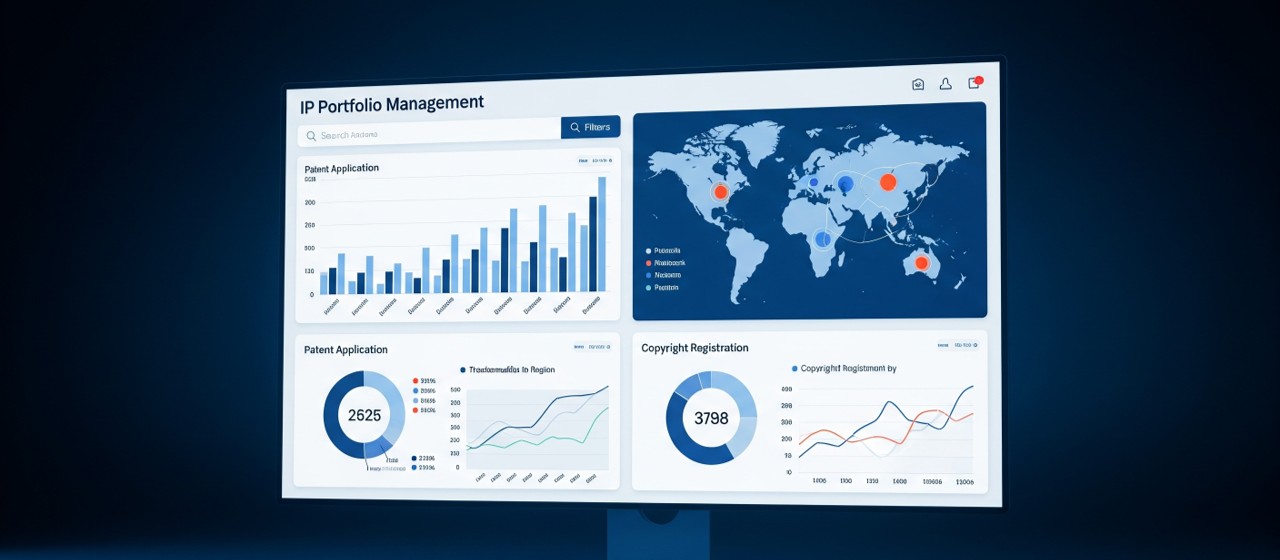
Reporting should cover several key dimensions. First, it should provide an overview of the current IP portfolio: how many assets exist, where they are located, how they are categorized, and what their status is. Second, it should highlight recent changes: new filings, abandonments, licensing deals, disputes, or significant deadlines. Third, it should identify gaps or opportunities based on business inputs. For example, if a new product is in development, does it require any specific patent or design protection? If a new brand is being launched, are the trademarks secured?
Good reporting also includes a financial dimension. IP rights come with costs — filing fees, attorney fees, translation costs, maintenance fees, and enforcement expenses. Reporting should make these costs transparent and link them to business benefits. This allows management to assess return on investment and make informed trade-offs.
Furthermore, reporting helps foster a culture of collaboration. When non-legal stakeholders understand the status and value of IP assets, they are more likely to contribute useful information, raise timely concerns, or support IP initiatives. Reporting thus becomes a tool for awareness building, alignment, and accountability.
To be effective, reports must be concise, visual, and tailored to the audience. Senior executives may need high-level summaries. Business unit leaders may want breakdowns by product line. IP teams may need detailed timelines and risk assessments. By adapting reports to each audience, IP management can ensure that the right people get the right information at the right time.
Investing in vs Divesting of IP Assets
Perhaps the most strategic element of operational IP portfolio management is deciding where to invest and where to divest. Every IP asset👉 A legally protected intangible resource creating business value. requires maintenance, and each filing decision implies long-term cost and commitment. Therefore, companies must constantly evaluate which IP rights deserve further investment and which should be sold or allowed to lapse.
Investing in IP means not only filing new applications but also expanding existing rights, enforcing them when necessary, and integrating them into business models. This may include extending protection to new markets, pursuing patent applications to cover additional features, or improving the quality of claims through continued prosecution. These investments should be made when the underlying IP asset is clearly tied to business value — whether through direct monetization, competitive advantage, or support for brand positioning.
At the same time, companies must be willing to divest. This can take several forms. Some IP assets may be abandoned due to obsolescence, cost, or irrelevance. Others may be licensed out to generate income or support open innovation👉 The use of external and internal ideas to drive innovation forward.. In some cases, patents may be sold outright — especially if they no longer fit the core business but may hold value for others. Trademarks or designs associated with discontinued products may also be candidates for sale.
Making these decisions requires clear criteria. Value indicators such as product relevance, licensing potential, market coverage, and legal strength must be assessed. So too must the costs of maintaining and enforcing each IP right. IP that is costly, legally weak, or strategically misaligned is a drain on resources. Divesting these assets frees up capacity for higher-impact activities.
An IP portfolio that never changes is likely becoming inefficient. Markets evolve, technologies shift, and business models transform. IP portfolios must be just as dynamic. Regular portfolio pruning not only reduces cost but also improves focus. It ensures that management attention and IP budgets are concentrated on the assets that truly matter.
Investing and divesting are not opposites — they are complementary. A healthy IP portfolio grows in areas of opportunity and shrinks in areas of decline. This adaptive approach is the hallmark of operational maturity in IP management. It reflects a shift from protection for its own sake to protection as a strategic resource.
Conclusion
Operational IP portfolio management is more than a legal or administrative function. It is a strategic discipline that enables organizations to turn intangible rights into tangible value. By managing the IP inventory with precision, monitoring strategic alignment, reporting IP needs with clarity, and making informed investment and divestment decisions, companies can maintain a portfolio that reflects and supports their evolving business strategy.
This approach demands collaboration across departments, robust systems for tracking and analysis, and a mindset that sees IP as a living resource — not a static record. As innovation cycles shorten and global competition👉 Rivalry between entities striving for a shared goal or limited resource. intensifies, the ability to manage IP dynamically becomes a key differentiator. It allows companies not only to defend their current position but to shape their future growth.
In the end, operational IP portfolio management is about control, transparency, and alignment. It brings order to complexity, connects IP assets with business strategy, and enables smarter decisions. In doing so, it secures the company’s intellectual capital while unlocking new opportunities for growth and innovation.
