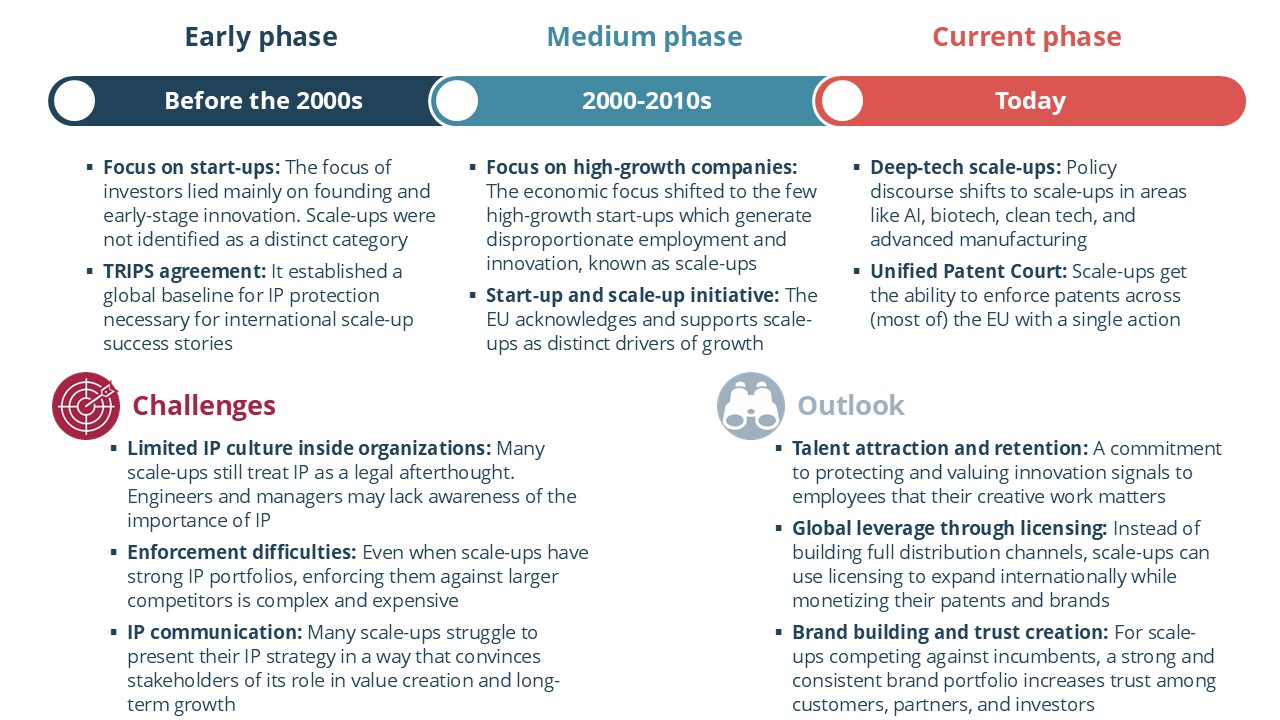

Scale-ups operate in an environment where rapid growth, international expansion, and continuous innovation👉 Gradual improvements to existing products or services. are the rule rather than the exception. To succeed, these companies need a structured approach to intellectual property👉 Creations of the mind protected by legal rights. (IP) that goes far beyond ad-hoc filings. A professional IP management👉 Strategic and operative handling of IP to maximize value. system becomes a strategic enabler: it protects inventions👉 A novel method, process or product that is original and useful., supports business objectives👉 Clear, measurable goals guiding a company’s strategy, priorities, and resource allocation., and creates lasting competitive advantage.
The first pillar is the establishment of a continuous IP management system. Instead of reacting to innovation👉 Practical application of new ideas to create value. by filing sporadic patents, scale-ups need structured IP processes that provide reliability and scalability. Clear governance, standardized invention disclosure procedures, and data-driven decision making👉 The process of choosing the best option among alternatives. reduce risks and ensure that valuable knowledge assets are systematically protected. A continuous system prevents the typical “stop-and-go” cycles in IP filings and creates predictability for both management and investors.
Equally important is targeted invention and IP generation. IP should not be the by-product of R&D but an integrated activity aligned with product development. Identifying IP needs for new products, generating inventions with freedom-to-operate in mind, and protecting strong trademarks are key. A product-centric IP portfolio allows scale-ups to capture value directly where it matters most: in their customer-facing offerings and unique technological features.
The third element is alignment of IP with business objectives. IP is not an end in itself but a tool to implement the company’s strategy. This means aligning filings and renewals with market priorities, identifying global IP needs when entering new markets, and continuously reviewing whether the IP portfolio reflects current and future business goals. Strategic IP management ensures that resources are invested where they generate the highest impact, turning the IP portfolio into a driver of value creation.
Finally, the establishment of an IP culture👉 Shared norms and habits that weave IP thinking into everyday work and decisions. ensures that IP is understood and appreciated across the organization. Creating awareness, integrating non-IP experts into IP processes, and onboarding employees with basic training fosters company-wide engagement. Continuous education transforms IP from a niche function into a shared responsibility that supports collaboration, trust, and long-term innovation. A strong IP culture elevates the role of the IP manager👉 An IP Manager oversees strategy, protection, and use of IP., making their contribution visible at the top management level.
For scale-ups, professional IP management is not optional – it is the foundation for sustainable growth, strategic partnerships, and international success.