|
|
🎯 IP Management Pulse #68
|
Your inbox-insider from Prof. Wurzer every two weeks
|
|
|
|
|
What creates value in an emerging technology is not always what is most visible.
|
In robotics, a technically sophisticated machine can still underperform if the process is poorly understood, the system is difficult to adapt or the operational knowledge remains with individual engineers and integrators. In GreenTech, even the way we measure technological progress can obscure which solutions actually deliver the required energy service most efficiently. And in quantum technologies, technological progress is beginning to create a new challenge: how do you prove an advantage once classical computers can no longer independently verify the result?
|
For IP management, these developments point to a common challenge: the relevant unit of analysis is often broader than the invention itself. Competitive advantage can sit in implementation know-how, in the function a technology ultimately performs, or in the evidence and validation architecture required to make a technological claim credible without disclosing the basis of differentiation.
|
This edition therefore looks at three questions: How can companies retain the know-how that makes automation actually work? How should GreenTech portfolios respond when technological substitution crosses established industry categories? And how should quantum companies balance openness, validation and proprietary advantage when technological performance itself needs to be proven?
|
One scheduling note before we begin: IP Management Pulse is taking a summer break after this edition. Our next issue will therefore not appear on 10 September as originally scheduled, but on 24 September.
|
|
|
|
In this issue
|
NEWS
|
Smart automation and the know-how behind it | Measuring GreenTech by the outcome | Proving quantum advantage without giving away the advantage
|
|
|
|
RESOURCES
|
Building litigation options before litigation starts
|
|
|
|
DEEP DIVES
|
Know-how Management | How Partners in IP Firms Can Build Authority Without Acting Like Marketers
|
|
|
|
IP MANAGEMENT LEARNINGS
|
Late to Digital Business Models: The IP Space Is Already Crowded
|
|
|
|
|
|
🤗 🍵 I wish you an exciting and informative read. I look forward to your comments and our exchange on LinkedIn.
|
|
|
|
|
|
|
|
|
|
Vanessa Loiola: Smart automation is more than the robot
Vanessa Loiola recently shared nine principles that, in her experience, distinguish “just automation” from smart automation. Her list starts well before technology selection: understand the process, define the real need, involve the team, document precisely, design for flexibility, prioritise safety, test repeatedly and continue improving. Her central point is that smart automation is not a one-off installation but an ongoing process of learning and adaptation.
|
Viewed through an IP-management lens, her checklist makes an easily overlooked asset visible: the practical knowledge required to make a robotic system perform reliably in its real operating environment.
|
That knowledge may emerge during process analysis, programming, commissioning, calibration, safety tuning, exception handling, changeovers, maintenance and repeated optimisation. Much of it may never become a separately patentable invention. Yet it can determine whether a company can adapt the system itself, transfer it to another production environment or improve it without becoming permanently dependent on the original integrator.
|
|
The IP question therefore begins before the automation project is handed over. Companies need to know which programming knowledge, parameters, documentation, interfaces, test results and improvement knowledge they will actually retain. They also need to distinguish between knowledge worth patenting, knowledge that should remain confidential and knowledge that must be documented internally so it does not disappear with a supplier or individual employee.
|
|
|
|
IP management implication
|
Treat implementation know-how as an IP asset, not as a by-product of the automation project. The handover should secure not only a functioning robot, but also the knowledge and rights required to understand, adapt, maintain and improve it.
|
|
|
|
|
|
|
Background information on the IPBA Connect platform
|
|
The article broadens the perspective from the robot itself to the wider operating capability created through software, data, integration and deployment know-how and shows why these less visible assets can become strategically important for robotics IP.
|
|
|
|
|
|
Michael Liebreich: GreenTech needs to measure the outcome, not the input
Michael Liebreich has reopened a fundamental debate about how the energy transition is measured. He argues that “primary energy” can be a misleading metric because people and businesses do not ultimately demand units of fuel input - they demand energy services. If the question is how much useful energy an economy needs, he argues, the relevant measure should be the service delivered; if the question is climate impact, emissions should be measured directly.
|
The point matters beyond energy statistics. GreenTech transitions frequently involve technological substitution across established categories. Electrification, storage, efficiency technologies and new process routes may solve the same underlying customer or industrial need through completely different technical architectures.
|
That creates a challenge for IP management. A portfolio or competitor landscape organised only around familiar technology labels can provide a very precise view of the wrong competitive field. The strategic question is not merely which companies develop a similar device or process. It is which alternative technologies can deliver the same function, performance or customer outcome.
|
|
For GreenTech companies, this suggests a more function-oriented portfolio view. Patent intelligence, technology scouting and portfolio roadmaps should connect protected technologies to the service or industrial outcome they enable. This makes technological substitutes visible earlier — including competitors that would disappear from a narrowly defined patent class or conventional product-market analysis.
|
|
|
|
IP management implication
|
Map IP against the function the customer buys, not only against the technology the company currently sells. In rapidly transforming GreenTech markets, the most important competitive threat - or licensing opportunity - may come from a technically different solution to the same underlying problem.
|
|
|
|
|
|
|
Background information on the IPBA Connect platform
|
|
The report shows how GreenTech markets increasingly overlap across technologies and value chains, and why IP portfolios need to reflect changing functions, substitutes and competitive landscapes rather than established product categories alone.
|
|
|
|
|
|
Sabrina Maniscalco: How do you prove quantum advantage?
Sabrina Maniscalco, CEO of Algorithmiq, recently highlighted a fundamental challenge for quantum computing: once a quantum computer reaches a point where classical systems can no longer reproduce the result, how can you prove that the result is correct?
|
Together with IBM, Algorithmiq tested its computation across different quantum processors and noise conditions. At the same time, the company is making a classical benchmark available so that others can challenge future quantum-advantage claims.
|
|
For IP management, this creates an interesting tension: quantum companies need enough openness to make performance claims credible, while still protecting the algorithms, implementation know-how and methods behind that performance.
|
|
|
|
IP management implication
|
Validation strategy becomes part of IP strategy. Companies need to decide deliberately what must be disclosed to create trust - and what must remain proprietary to preserve competitive advantage.
|
|
|
|
|
|
|
Background information on the IPBA Connect platform
|
|
The article broadens the discussion from patents to validation, reliability evidence, trade secrets and ecosystem trust - exactly the issues that become critical when technological performance itself needs to be proven.
|
|
|
|
|
|
|
|
|
|
Building litigation options before litigation starts
The UPC is changing not only how European patents are enforced, but also how portfolios need to be designed long before a dispute arises.
|
Using insights from Christof Augenstein and the developing UPC landscape, this article shows why decisions made during prosecution can determine the strategic options available years later. Claim scope, divisional strategy, national fallback positions, validation choices and the ability to observe infringement can all influence whether a patent eventually becomes a credible enforcement asset.
|
|
The key takeaway for IP managers is that litigation readiness is increasingly a portfolio-quality issue. A strong patent is not simply one with broad claims. It is one that can perform a defined strategic role when enforcement becomes commercially relevant.
|
|
|
|
|
|
|
|
The article connects prosecution, portfolio design and litigation strategy - and shows how apparently routine decisions made today can preserve or eliminate valuable enforcement options years later.
|
|
|
|
|
|
|
|
|
|
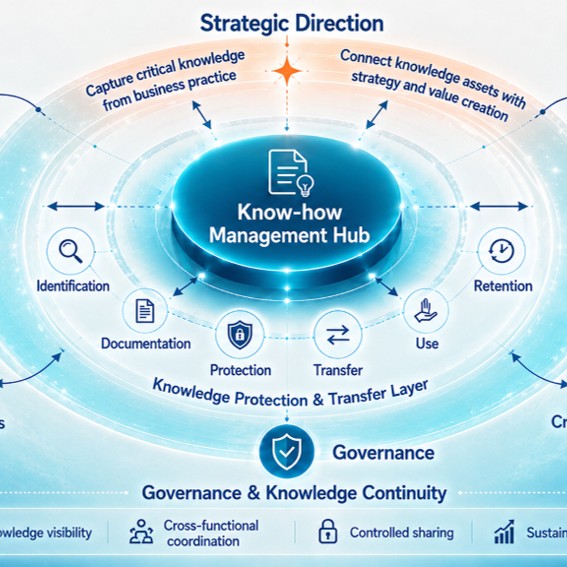
Know-how Management
Some of the most valuable IP in technology-driven companies never appears in a patent portfolio. It lives in experience, process details, technical judgment, failure histories, implementation routines and the knowledge required to make complex systems perform reliably.
|
This 🧭dIPlex Deep Dive examines how companies can identify such critical know-how, turn individual expertise into organisational capability and decide what should be documented, shared, restricted or protected as a trade secret.
|
|
It connects particularly well with this issue’s Robotics and Quantum stories: both show that competitive advantage depends not only on formal rights, but also on managing the boundary between knowledge that needs to circulate and knowledge that must remain protected.
|
|
|
|
|
Read more on the digital IP lexicon 🧭dIPlex
|
|
|
|
|
Visible Council - the IP Expert Branding Column
|
|
|
How Partners in IP Firms Can Build Authority Without Acting Like Marketers
|
|
by columnist Giulia Donato, Branding & Communication Consultant at people and brand strategies
|
|
|
|
Many IP partners are uncomfortable with the idea of “personal branding” because it can sound like self-promotion. Giulia Donato argues that authority is built differently: by making visible how an expert thinks, which client decisions they are particularly good at navigating and what they notice that others may overlook.
|
|
Rather than commenting on every legal development, partners can build a clearer market position by translating recurring client questions, trade-offs and advisory patterns into visible expertise. The goal is not to behave like a marketer, but to help prospective clients understand why this particular expert should be trusted when an important decision arises.
|
|
|
|
|
|
|
|
|
|
|
|
My Favorite from the 📝IP Business Academy Blog
Late to Digital Business Models: The IP Space Is Already Crowded
|
Digital transformation may feel new inside a traditional industrial company, but the relevant IP landscape is often anything but new. Software-controlled systems, AI, connectivity, platforms and data-driven services have been attracting patent filings for years. Companies entering these fields today may therefore find that seemingly obvious digital features or business-model elements already sit inside a crowded rights landscape.
|
|
The practical lesson for IP managers is to become involved before the digital business model has been fixed. Early IP analysis can identify third-party constraints, reveal where meaningful exclusivity is still achievable and help connect patents, trade secrets, software, data and contracts to the customer value the company actually wants to protect.
|
|
|
|
|
|
|
|
|
|