|
|
🎯 IP Management Pulse #67
|
Your inbox-insider from Prof. Wurzer every two weeks
|
|
|
|
|
|
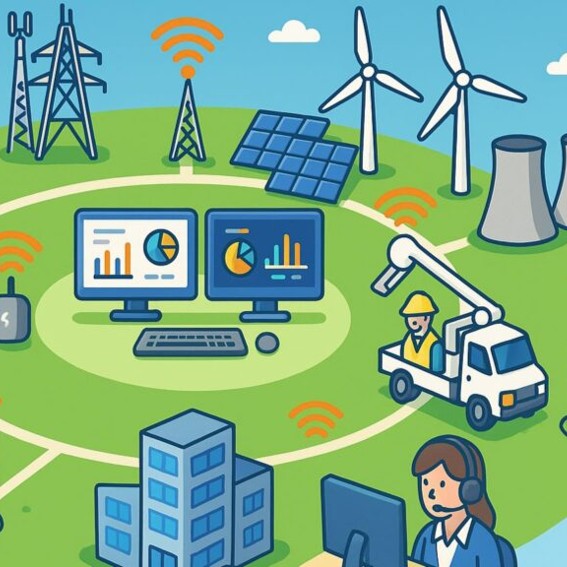
Across GreenTech, Industrial IoT and MedTech, innovation is moving beyond the boundaries of the individual product. Renewable generation increasingly depends on digital coordination across grids, storage and markets. Smart machines create value through platforms that connect heterogeneous fleets and deploy intelligence at the edge. Connected medical devices combine hardware with software, cybersecurity controls, regulatory documentation and clinical workflows.
|
This shift changes where competitive control sits. A strong patent around a component may remain essential, but it rarely secures the complete value proposition. The decisive position can lie in the orchestration layer, access to operational data, control of interfaces, the ability to update software, ownership of improvements, or the evidence required to keep a regulated product on the market. These control points are often distributed across technology, contracts and organisational processes rather than contained in one formal right.
|
The three NEWS items therefore point to one broader IP-management task: companies must design an architecture that connects patents with trade secrets, software and data rights, standards, cybersecurity, regulatory evidence and ecosystem governance. As technologies scale into systems, IP management becomes less about protecting an isolated invention and more about preserving the ability to participate, differentiate and negotiate without losing control of the value contributed.
|
|
|
|
In this issue
|
NEWS
|
Renewables as system infrastructure | Orchestration of smart-machine fleets | Cybersecurity debt in MedTech regulation
|
|
|
|
RESOURCES
|
Who will control the operating system of the energy transition? | When does UPC litigation leverage become a portfolio-design issue?
|
|
|
|
DEEP DIVES
|
Data and Technology Standards | When personal branding feels uncomfortable
|
|
|
|
IP MANAGEMENT LEARNINGS
|
Is Your Digital Footprint Conference-Ready?
|
|
|
|
|
|
🤗 🍵 I wish you an exciting and informative read. I look forward to your comments and our exchange on LinkedIn.
|
|
|
|
|
|
|
|
|
|
Jan Rosenow: Renewables are becoming the electricity system
|
Jan Rosenow recently highlighted new IEA data showing renewables overtaking coal as the world's largest source of electricity generation after reaching near parity in 2025. He points to projected growth of about 8% in 2026 and 9% in 2027, taking renewables from 33% of generation in 2025 to 37% in 2027. His regional comparison is equally important: the EU is expected to obtain more than half of its electricity from renewables by 2027.
|
Rosenow's message is not simply that another clean technology is growing. Renewables are becoming the system in which other technologies must operate. As their share rises, value shifts toward the capabilities that integrate, balance, forecast, store and trade variable electricity. The relevant competitive unit is therefore no longer an isolated solar panel, turbine or battery, but a coordinated architecture of hardware, software, data and grid access.
|
That is where the IP question begins. Companies need to identify which parts of this architecture they can protect and control: power electronics and storage patents, forecasting algorithms, operational datasets, interface know-how, software rights, interoperability positions and contractual access to customers or flexibility markets. Scale does not make IP less important; it changes where the defensible position sits.
|
|
|
|
IP management implication
|
IP teams should map the control points created by renewable integration. The priority is to connect patent portfolios with software, data, standards and market-access rights before complementary capabilities become the real bottleneck.
|
|
|
|
|
|
|
Background information on the IPBA Connect platform
|
|
If Rosenow's system-level view caught your attention, this article shows how smart grids, AI and patent strategy shape the infrastructure needed to integrate renewables at scale.
|
|
|
|
|
|
Dimitrios Spiliopoulos: Orchestration is becoming the differentiator
|
In observations published after a visit to Japan, Dimitrios Spiliopoulos identifies a concrete opportunity in Smart Machines and Physical AI: unified platforms that manage, monitor and orchestrate diverse fleets of robots, sensors and machines. His central thesis is that the orchestration layer is becoming a long-term differentiator as Agentic AI and Physical AI create new urgency around coordinated machine operation.
|
Spiliopoulos also sees AI moving closer to the edge for continuity and cost efficiency. At the same time, he expects companies with robots already deployed to capture much of the mid-term impact: they possess proven technology, installed fleets, customer trust, distribution and servicing capabilities. The next step is to upgrade those assets with models, simulation and autonomous capabilities rather than build an entirely new industrial footprint.
|
This shifts the Industrial IoT control point. Competitive advantage may no longer sit primarily in an individual machine, but in the layer that connects machines, interprets their data and governs how new capabilities are deployed across the fleet. The resulting IP architecture spans interface specifications, orchestration software, operational datasets, edge models, simulation environments, service know-how and rights in jointly developed upgrades.
|
|
|
|
IP management implication
|
IP managers should map who controls the orchestration layer before smart-machine ecosystems harden. Contracts and technical architecture must clarify access to fleet data, model-training rights, ownership of improvements, interface control, portability and the continuing rights of OEMs, platform providers and startup partners.
|
|
|
|
|
|
|
Background information on the IPBA Connect platform
|
|
If the orchestration layer struck you as the emerging control point, this Deep Dive explains the platform, network and business-model forces that make such layers increasingly powerful.
|
|
|
|
|
|
Sean Smith: Cybersecurity debt becomes regulatory delay
|
In his 6 August article, Sean Smith explains that FDA expects roughly 14 cybersecurity deliverables in a 510(k), but that the eight categories of security controls determine how expensive the rest of the work becomes. His central warning is that the controls are not a menu. A team can implement seven correctly and still be forced back into product development because one critical control is missing or wrongly designed.
|
Smith makes the business consequence tangible. Good implementation with weak documentation may be repairable in weeks; a missing encryption or authentication architecture can require redesign and months of delay. Using the burn-rate example discussed with his interviewees, a six-month setback for a startup can translate into about USD 1.5 million before lost market opportunity is considered.
|
This is also an IP-management issue. Cybersecurity choices determine what technical information must be generated, documented and disclosed; which third-party components and licences become dependencies; how software updates and vulnerability fixes affect the protected product; and whether security know-how remains a differentiator after submission. A patent filing, regulatory submission and security architecture should therefore not be planned as separate workstreams.
|
|
|
|
IP management implication
|
MedTech teams should connect invention capture, freedom-to-operate, open-source governance, trade-secret handling and regulatory documentation to the cybersecurity design process. The cheapest control is the one designed before the architecture hardens.
|
|
|
|
|
|
|
Background information on the IPBA Connect platform
|
|
If Smith's warning made the cost of a single architectural weakness tangible, this article broadens the lens to how software, data and connectivity are reshaping value creation and patent strategy across MedTech.
|
|
|
|
|
|
|
|
|
|
Who will control the operating system of the energy transition?
|
Hermione Thompson examines a strategic layer of the energy transition that is easy to overlook: value may increasingly concentrate not only in physical infrastructure, but in the digital systems that coordinate distributed energy assets. Her contribution is a useful lens for IP managers assessing where control can arise through software, data access, interfaces, standards and ecosystem governance - and how companies can participate in connected energy markets without giving away the assets that sustain their position.
|
|
|
|
|
|
|
When does UPC litigation leverage become a portfolio-design issue?
|
Starting from Christof Augenstein’s view of the UPC as an international system whose influence reaches beyond the participating European states, this forthcoming article asks what the Court means for patent portfolio design. Its practical message is that litigation leverage is created long before a dispute: through claim drafting, divisional strategy, validation and unitary-effect choices, national fallback positions, and the early identification of patents covering commercially critical functions. For IP managers, the patent family therefore becomes an architecture of enforcement options rather than a collection of interchangeable rights.
|
|
|
|
|
|
|
|
|
|
|
|
Data and Technology Standards
|
Connected systems generate value by allowing data, devices and services to work together. The same connectivity creates two recurring IP-management questions: who may access, use and protect the resulting data, and who controls the standards that make interoperability possible? This individual dIPlex Deep Dive examines both sides of that problem through smart-city systems, where personal, operational and commercially sensitive data must be governed across multiple public and private actors.
|
The Deep Dive also explains why interoperability is not a purely technical goal. Communication protocols and other standards may depend on standard-essential patents, licensing terms and access conditions that shape both market entry and competitive position. The framework transfers directly to this issue’s three Target Areas: connected energy platforms, industrial machine fleets and digital health infrastructures all depend on clear data rights, cybersecurity, transparent access rules and a deliberate position toward standards. It is therefore a useful starting point for identifying where openness is necessary—and where control still needs to be preserved.
|
|
|
|
Read more on the digital IP lexicon 🧭dIPlex
|
|
|
|
|
Visible Council - the IP Expert Branding Column
|
|
|
When personal branding feels uncomfortable—and why that matters
|
|
by columnist Giulia Donato, Branding & Communication Consultant at people and brand strategies
|
|
|
|
|
In this column, Giulia Donato takes seriously the discomfort many IP experts feel around personal branding. She reframes the task away from self-promotion and toward professional clarity: helping the right clients understand what an expert stands for, where that expertise becomes particularly valuable and how the expert approaches consequential questions. Her practical point is that authenticity still requires selection. A clear position does not replace a reputation built through excellent work; it helps that reputation travel beyond the people who already know it. For specialists whose reputation rests on expertise and results, that distinction matters. It allows visibility to clarify credibility without turning professional communication into personal performance.
|
|
|
|
|
|
|
|
|
|
|
|
My Favorite from the 📝IP Business Academy Blog
Is your digital footprint conference-ready?
|
|
A conference meeting rarely begins at the conference. Potential clients, partners and peers often look up a speaker or attendee before deciding whether a conversation is worth their time. This article explains why an expert’s digital footprint should make their relevance, specialist perspective and credibility immediately visible—and why profile, content and conference activity need to tell the same story.
|
The practical takeaway is simple: conference preparation should include a review of what others will find online. A clear LinkedIn profile, a small body of relevant expert content and an accessible point of view can turn a name on an attendee list into a reason to start a conversation.
|
|
|
|
|
|
|
|
|
|